
[Meticulous Doctor] Tattoo RemovalPico Laser Tattoo Removal

Pico Laser Tattoo Removal
Pico laser tattoo removal is planned according to the tattoo and pigment characteristics. Short 300-picosecond pulses target pigment while the treatment plan is tailored to each patient. *VAT not included
Options
Treatment Details
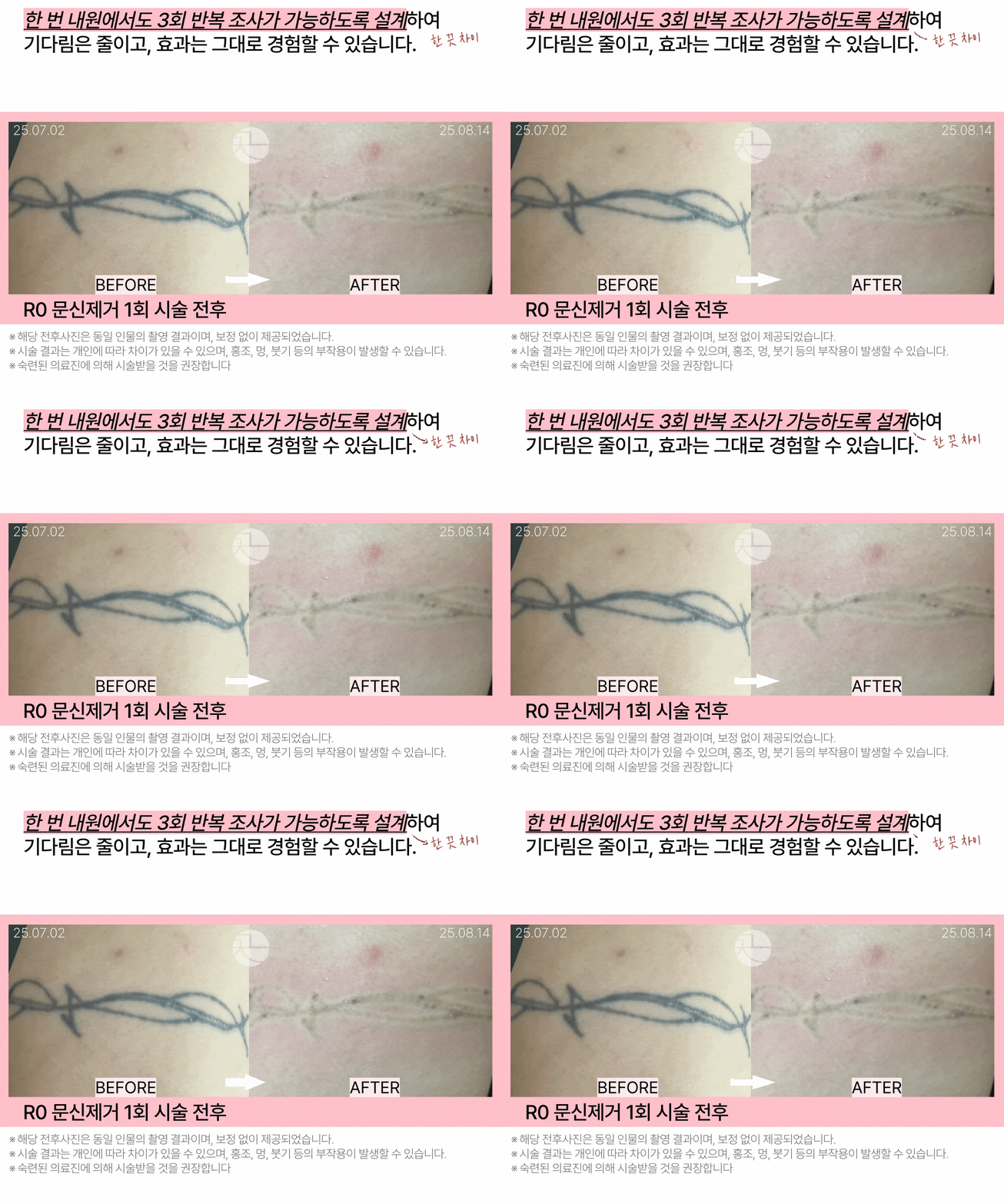
Tattoo Removal with R0
How to Perform Immediate Repeat Laser Passes Using PFD
When removing tattoos, the method of breaking down pigments using nanosecond lasers, such as Q-switched Nd:YAG (1064nm) lasers, has typically been used.
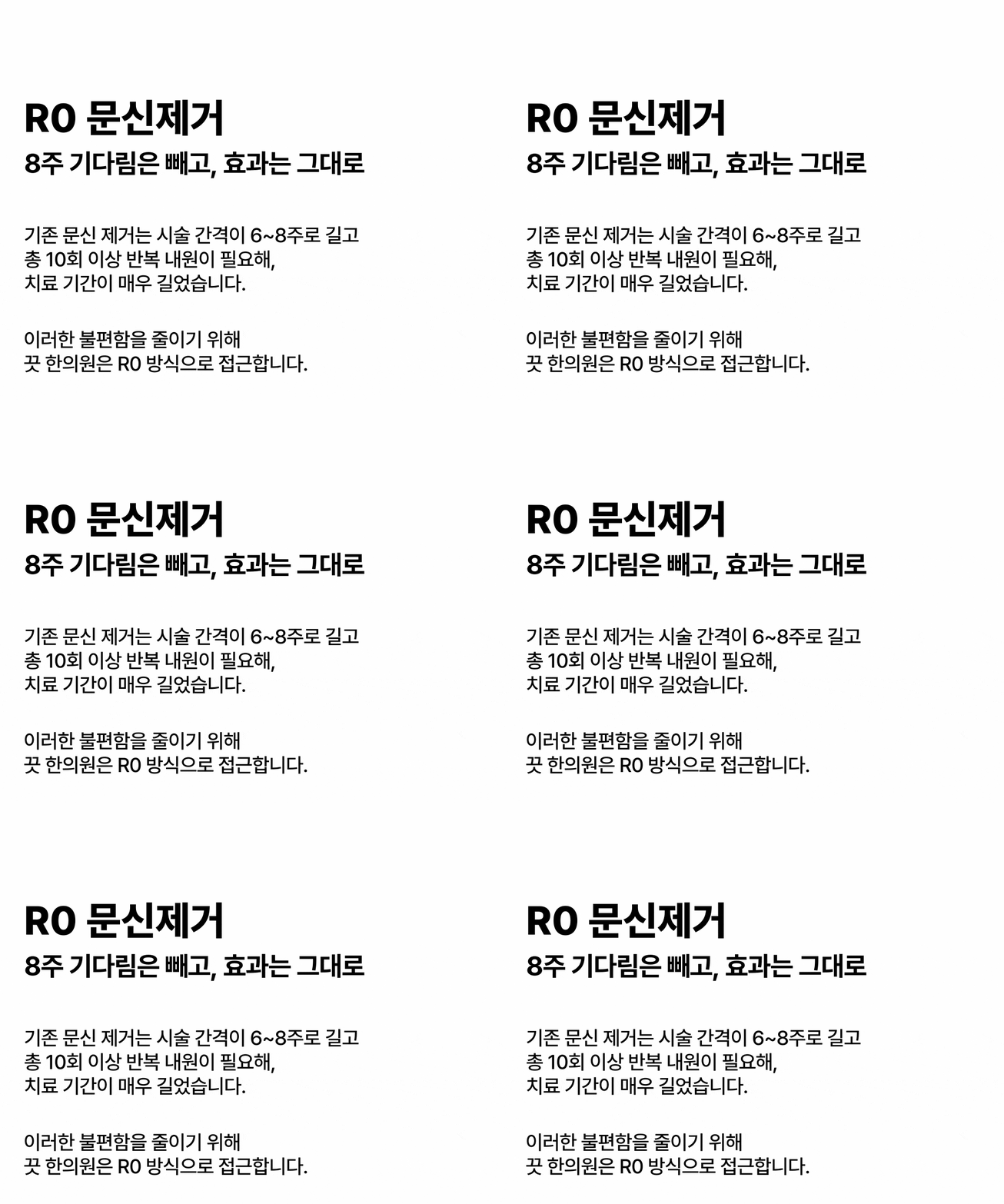
With previous methods, after one laser shot, a recovery period of 6-8 weeks was required before the next treatment could be performed. The entire treatment often required more than 10 sessions, which was a burden due to the long time commitment.
One of the new treatment methods that emerged to reduce such inconvenience is the R0 method.
What is the R0 Method?
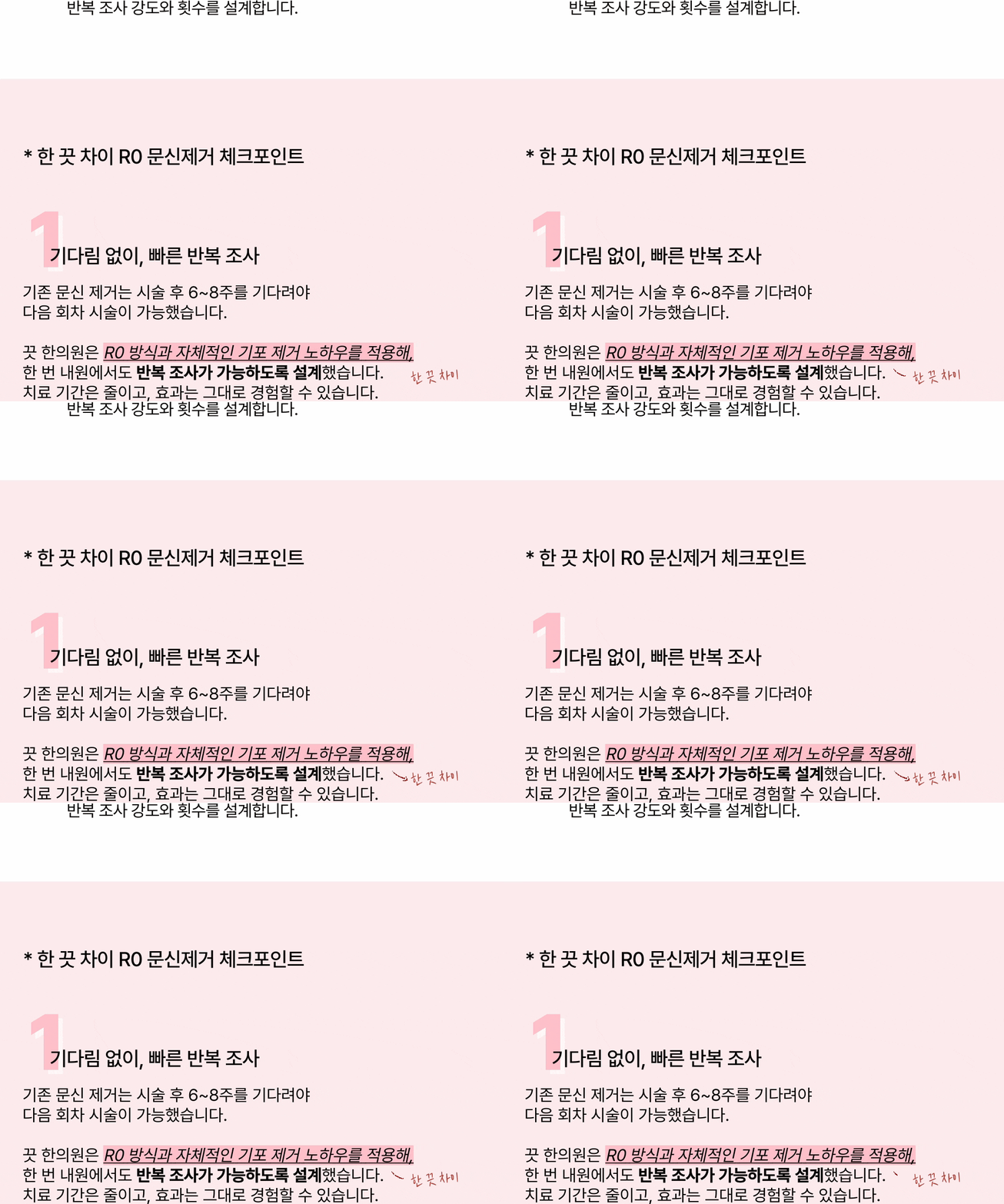
R0 is a tattoo removal procedure where the laser is continuously fired up to four times on the same area during a single patient visit.
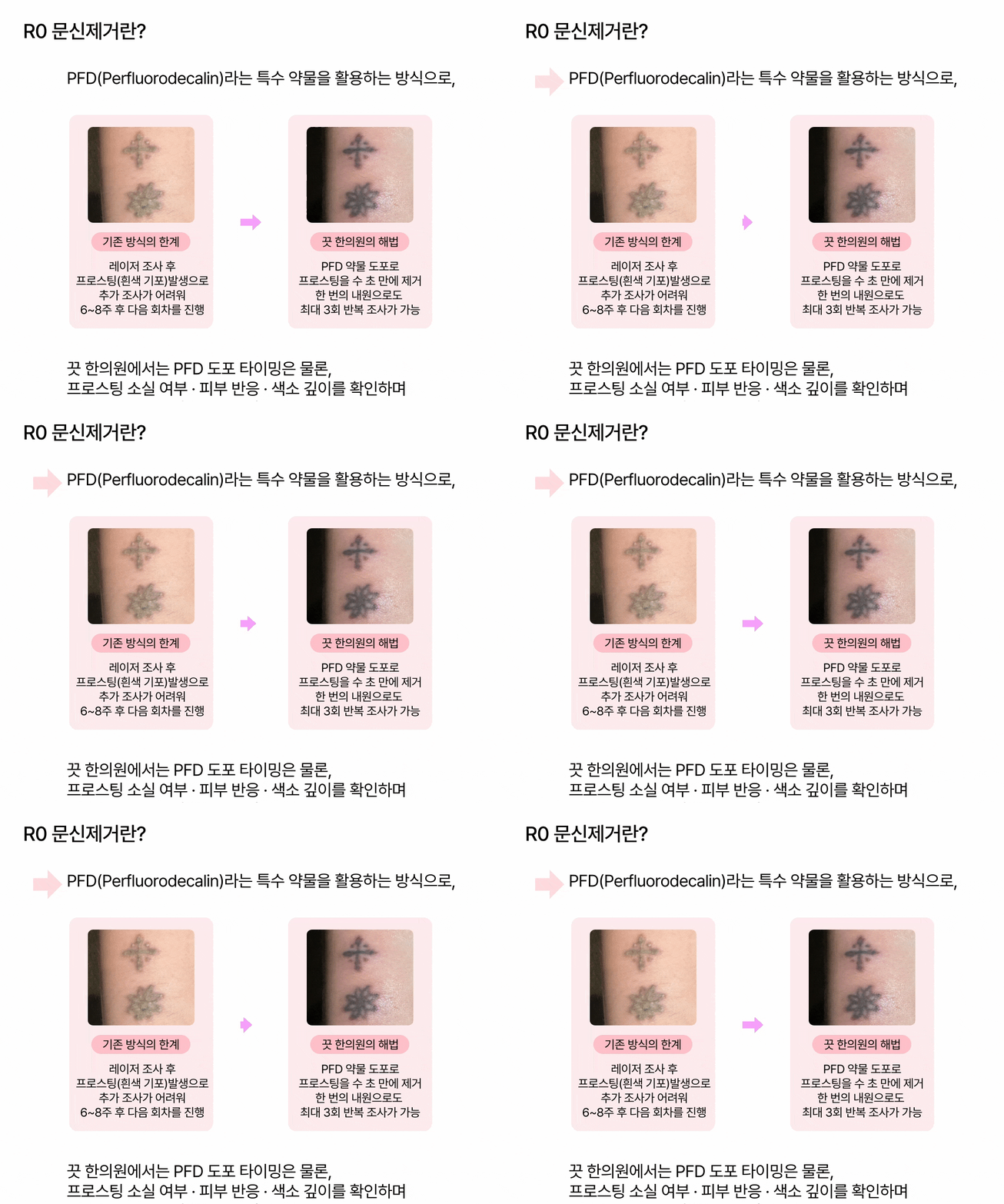
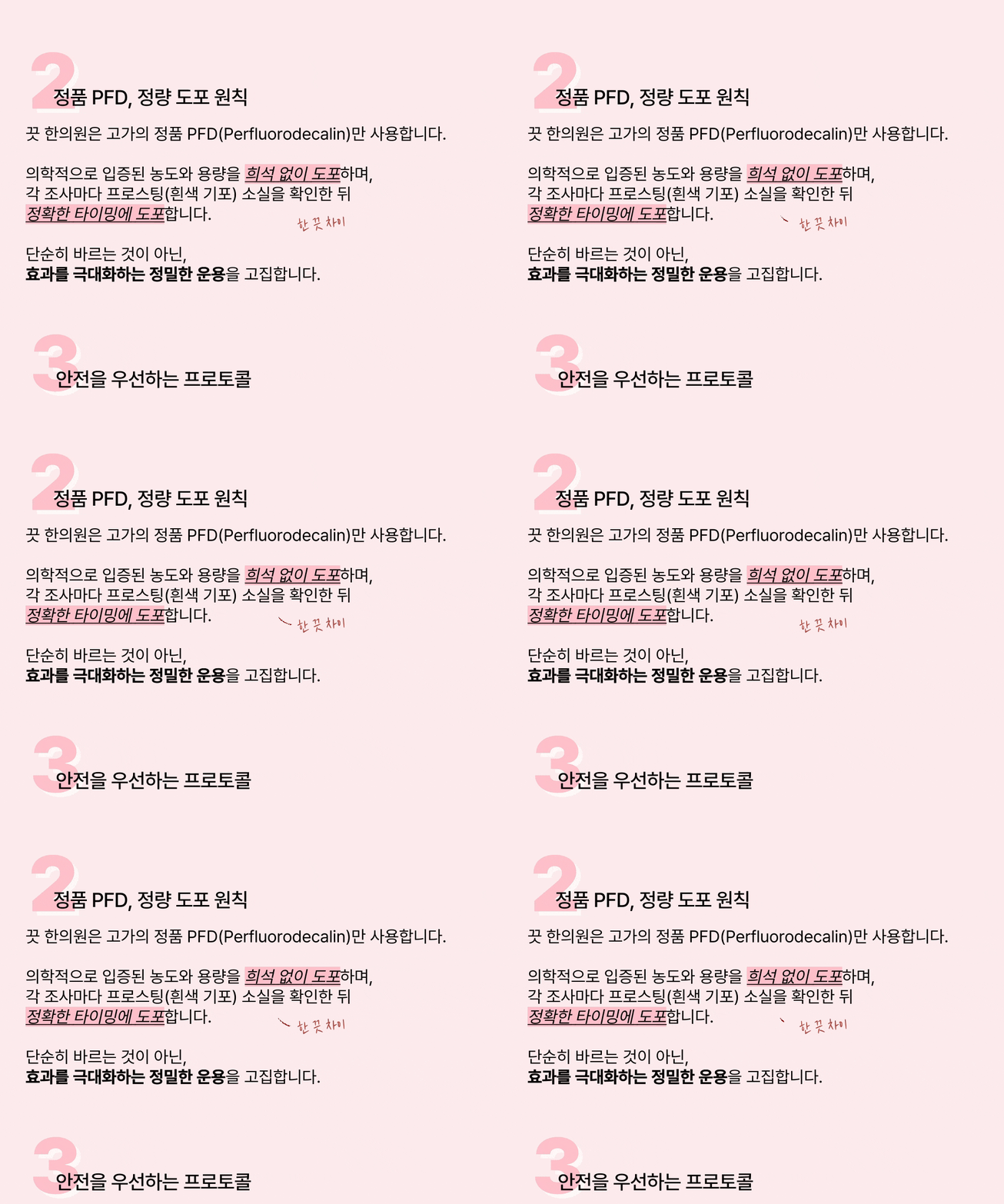
The main principle of this treatment involves utilizing a special liquid medication called ‘PFD (Perfluorodecalin)’.
During laser treatment, you can observe white bubbles, known as 'frosting,' appearing on the skin's surface.
These bubbles scatter the laser light, thereby significantly reducing the effectiveness of subsequent laser passes.
Previously, one would have to wait several tens of minutes for these bubbles to naturally disappear or postpone the next session. However, even with such waiting, it was difficult for the bubbles to completely vanish.
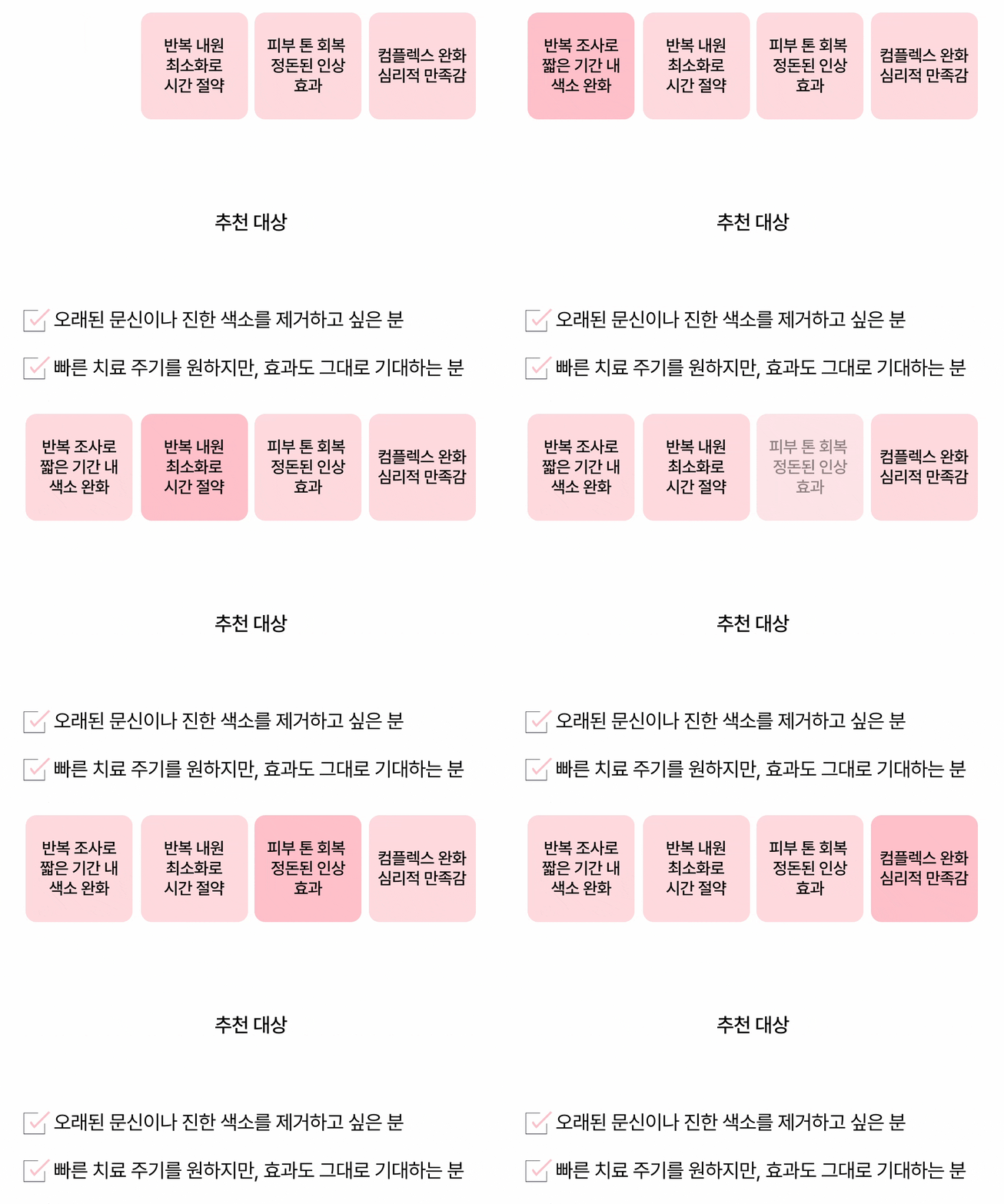
However, applying PFD can eliminate frosting in just a few seconds, making it possible to shorten laser treatment intervals to 1-2 minutes and perform multiple continuous passes.
This means it can help significantly reduce tattoo pigment in a much shorter time than previous methods.
Related Research Findings
- Biesman et al.'s 2013 Study
- Patients who underwent the R0 method were reportedly able to reduce the number of treatment sessions by approximately 30-50% compared to conventional methods.
- Furthermore, it was revealed that repeat laser passes are possible immediately after the initial shot.
- Kauvar et al.'s 2020 Study
- Patients who received approximately 3 R0 treatments were reported to have achieved results equivalent to roughly 10 total laser passes with conventional methods. (Approximately 3 sessions with R0)
- After treatment, an improvement of 70-90% or more disappearance of tattoo pigment was observed.
- The results also showed a lower risk of side effects such as Post-Inflammatory Hyperpigmentation (PIH).
But why are repeat passes generally limited to around 3 times, rather than the maximum of 4?
The R0 treatment is technically known to allow up to four repeat laser passes.
However, in actual clinical practice, repeat treatments are often performed only 2-3 times.
There are several reasons for this:
1. Asian skin has different characteristics.
Asian skin's melanocytes react sensitively to stimulation, leading to a relatively higher chance of developing Post-Inflammatory Hyperpigmentation (PIH).
Especially for those with Fitzpatrick skin types III-IV,
excessive repeat laser passes can go beyond pigment destruction and apply excessive stimulation to the skin, potentially leading to darker hyperpigmentation.
2. Balance between treatment sessions and safety
Generally, up to 3 passes can be repeated while closely observing the skin's reaction, but
if repeated 4 or more times, the likelihood of damage to normal skin tissue, pain, redness, and minor burn reactions can sharply increase.
3. Limitations of laser pass efficiency
Even with PFD application, there are certain limits to the amount of pigment particles that the laser can reach and effectively treat.
After approximately 3 repeat passes in a single session, the laser's efficiency in pigment destruction gradually decreases.
At this point, even if the laser intensity is increased, the expected therapeutic effect is minimal, and the risk of side effects may only increase.
In conclusion, the technical possibility of 'up to 4 passes' and the 'safest and most effective number of treatment sessions for the patient' can differ.
Therefore, our medical team prioritizes patient skin safety and treatment effectiveness, making 3 repeat passes a fundamental principle.
So, why don't all medical institutions adopt the R0 method?
From the perspective of a medical institution, it's difficult to see this treatment method as having only advantages.
- PFD drugs are costly, and a stable supply is difficult.
- Planning the precise application timing and repeated laser passes requires the delicate judgment of experienced medical staff.
- Compared to general tattoo removal procedures, the time required can be 2 to 3 times longer.
For this reason, places prioritizing a fast turnover rate may hesitate to adopt this method.
However, we believe that the completeness of the procedure and reducing the burden on our patients are important,
we cannot overlook the efficiency of this method.
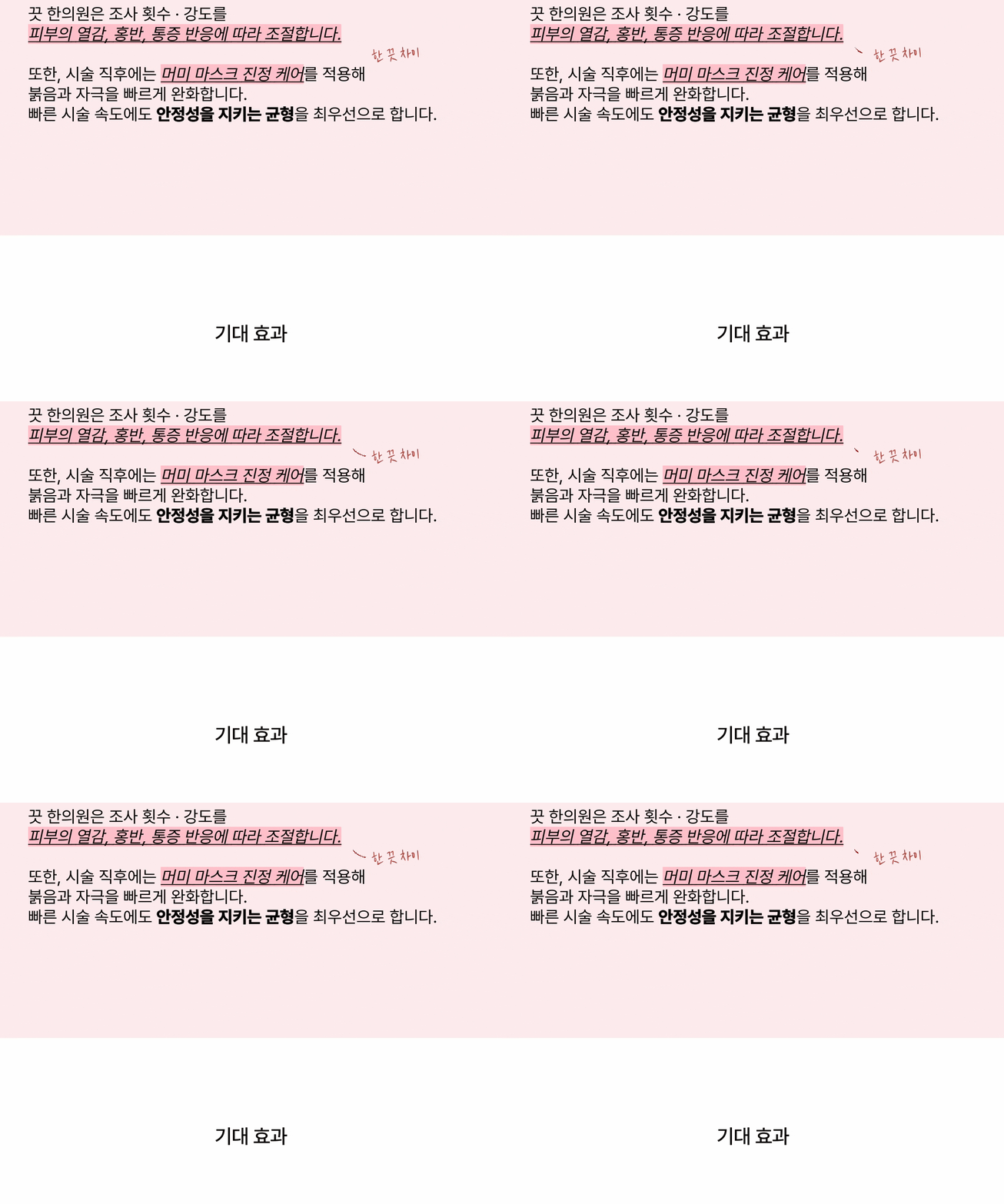
Our medical staff performs laser passes only as many times as necessary, avoiding unnecessary overtreatment.
We prioritize our patients' skin safety and always strive for satisfactory tattoo removal results.
We pursue efficiency in the treatment process and strive to reduce the burden of multiple sessions. We prioritize patient safety and work hard for satisfying results.
Tattoo Removal Procedure Process
See each step, from your first consultation to completion.
- 01
A thorough consultation is conducted to understand the individual's skin condition and tattoo characteristics.
- 02
Anesthetic cream is applied to reduce pain during the procedure.
- 03
The laser is irradiated in a individually customized manner.
- 04
Post-procedure, a soothing finishing care (mummy mask) is applied for skin calming.
Treatment Basics
Treatment time, anesthesia, recovery and how long results last, at a glance.
TIME
1 hour to 1 hour 30 minutes (varies by size)
ANESTHESIA
Anesthetic cream
RECOVERY
Immediate return to daily life
Ideal For
One Fine Difference makes real results.
- KKEUT POINT 01
Recommended for those who wish to regain clear skin tone due to unwanted tattoos.
Q&A
Answers to the questions we hear most.
How many sessions are needed for tattoo removal?

The recommended number of sessions varies depending on the depth, type, and area of the tattoo pigment. We usually recommend multiple sessions with an interval of about 4 to 6 weeks.
Do I need to prepare ointment myself after the procedure?
After tattoo removal, your skin may become sensitive. We provide the necessary ointment to help with the care of the treated area.
Cautions
Results = Treatment × Aftercare. Please follow the notes below.
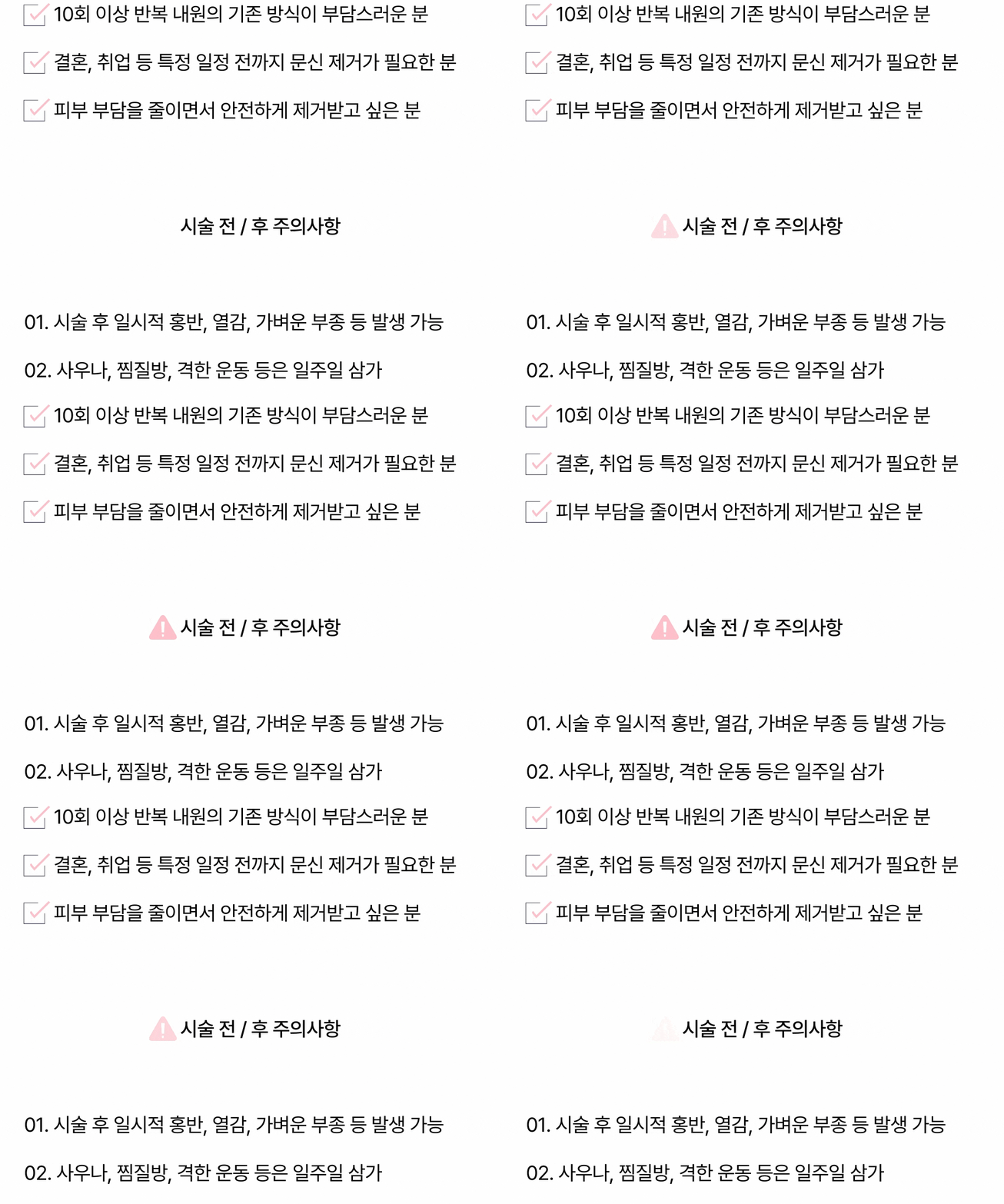
To avoid irritation of the treated area, it is advisable to refrain from using scrub products for about a week after the procedure.
If scabs form on the treated area, do not pick them off artificially; please wait for them to fall off naturally.
For one day after the procedure, special care must be taken to prevent direct contact with water.
After the procedure, be careful not to rub or irritate the treated area in any other way.
For about seven days after the procedure, it is recommended to avoid alcohol, smoking, sauna use, and strenuous exercise.